*** Topic officiel des ESC ***

Le 27 juin 2017 à 13:33:11 RogerNimier a écrit :
Ça a l'air stylé. Tu pars en échange ?
yes EPFL et la je dois choisir deux cours parmi ces 3 la 

Je prendrais le 1 à 100%
Après le 2 c'est orienté finance pure et le 3 c'est orienté maths pures
C'est toi qui a choisi ou ton école a sélectionnée les cours ?
Le 27 juin 2017 à 13:39:22 RogerNimier a écrit :
Je prendrais le 1 à 100%Après le 2 c'est orienté finance pure et le 3 c'est orienté maths pures
C'est toi qui a choisi ou ton école a sélectionnée les cours ?
y'a un nombre de cours possible, j'en ai déjà choisi et il m'en reste 2 a prendre
L'économétrie c'est plein de trucs chiants à apprendre mais une fois que tu maîtrises tout roule, et c'est assez intéressant. Mais dans 10 ans c'est remplacé par des IA
Le 27 juin 2017 à 13:18:52 killagg a écrit :
parmi ces 3 cours, si vous deviez en choisir 2, lesquels seraient les plus intéressants ?Financial econometrics
1. Introduction: Describing financial time series
2. Overview of estimation techniques and applications
• Ordinary least squares, maximum likelihood and generalized method of moments, pseudo likelihood estimator. • Applications : CAPM, factor models, predictive regressions.
3. An introduction to financial time series analysis: • Stationarity/non stationarity
• Characterization of time series
• Class of ARIMA(p,d,q) processes
4. Multivariate time series analysis
• Vectorial autoregressive models (VAR) • Cointegration and VECM
• Statistical arbitrage
5. Modeling volatility
• Measuring volatility
• ARCH models
• GARCH models and extensions
6. Multivariate GARCH models and Dynamic (conditional) correlation models 7. Forecasting volatility
8. Risk managementInvestments :
"Topics include portfolio selection, equilibrium asset pricing, arbitrage pricing, market efficiency, behavioral finance, tests of asset pricing models, trading strategies in equity, fixed income, foreign exchange, and commodity markets, as well as dynamic asset allocation.
The course is rigorous, and students are expected to be able to understand and apply quantitative methods. Examples will illustrate real-world applications of the theory."Numerical approximation of PDE's
"Linear elliptic problems: weak form, well-posedness, Galerkin approximation
• Finite element approximation in two and three dimensions: stability, convergence, a-priori error estimates in different norms, implementation aspects
• Mixed problems: weak formulation, well-posedness, inf-sup condition. Compatible finite element approximations, convergence analysis
• Applications to incompressible elasticity, Stokes flows, Darcy equations'
T'es chez EPEL ?
Econometrics et Numerical approximation
Tu peux apprendre a investir par toi meme, ne perd pas un cours pour ce genre de contenu.
La PMA bientôt légalisée 
Bientôt la GPA, la pédophilie, l'inceste et la nécrophilie 
Le progrès 
Prends le 1
Le 2 c'est pipo et le 3 c'est ultra chiant
Aucun rapport de ?
Le 27 juin 2017 à 14:18:16 Ballon_Flottant a écrit :
Le 27 juin 2017 à 14:17:16 RogerNimier a écrit :
Aucun rapport de ?Mettre sur le même pied la GPA avec les pédos, inceste ...

Tu comprends pas qu'on est dans un culte forcené de l'égalité et de la liberté individuelle et ce, à tout prix ?
Tu piges pas qu'on nous sort la même rhétorique à chaque fois ? "Ouaip on autorise le mariage gay mais tqt on mettra ni la PMA ni la GPA  ", là on a la PMA, on aura la GPA je te le dis, c'est l'ordre des choses.
De plus, tu sembles oublier que dans les années 70 les journaux de gauche faisaient ouvertement l'apologie de la pédophilie ( https://www.google.fr/search?q=une+p%C3%A9dophiles+lib%C3%A9ration&source=lnms&tbm=isch&sa=X&ved=0ahUKEwjNsszNgd7UAhVRa1AKHavLDiUQ_AUIDCgD&biw=1242&bih=602 ) et ces gens là sont au pouvoir.
" Pourquoi interdire la pédophilie hein ? Les deux sont consentants et ils sont libres non ? T'es facho pour refuser à quelqu'un d'exprimer librement sa liberté ?  "
"
Le 27 juin 2017 à 14:18:16 Ballon_Flottant a écrit :
Le 27 juin 2017 à 14:17:16 RogerNimier a écrit :
Aucun rapport de ?Mettre sur le même pied la GPA avec les pédos, inceste ...
Si si. L'immoralité de la chose
Justement si.
La majorité sexuelle est déjà de 15 piges, crois moi ça va arriver. Il faut tout détruire pour n'avoir que des consommateurs stupides. Détruire la culture, la religion maintenant la famille. Détruire les mœurs etc.
Notre monde ressemble de plus en plus à Huxley 
Le 27 juin 2017 à 14:25:47 Ballon_Flottant a écrit :
Le 27 juin 2017 à 14:22:40 RogerNimier a écrit :
Le 27 juin 2017 à 14:18:16 Ballon_Flottant a écrit :
Le 27 juin 2017 à 14:17:16 RogerNimier a écrit :
Aucun rapport de ?Mettre sur le même pied la GPA avec les pédos, inceste ...
Tu comprends pas qu'on est dans un culte forcené de l'égalité et de la liberté individuelle et ce, à tout prix ?
Tu piges pas qu'on nous sort la même rhétorique à chaque fois ? "Ouaip on autorise le mariage gay mais tqt on mettra ni la PMA ni la GPA
Et ce sera une bonne chose
De plus, tu sembles oublier que dans les années 70 les journaux de gauche faisaient ouvertement l'apologie de la pédophilie ( https://www.google.fr/search?q=une+p%C3%A9dophiles+lib%C3%A9ration&source=lnms&tbm=isch&sa=X&ved=0ahUKEwjNsszNgd7UAhVRa1AKHavLDiUQ_AUIDCgD&biw=1242&bih=602 ) et ces gens là sont au pouvoir.
" Pourquoi interdire la pédophilie hein ? Les deux sont consentants et ils sont libres non ? T'es facho pour refuser à quelqu'un d'exprimer librement sa liberté ?
Justement non, et c'est bien là la limite de la progression : qu'on laisse 2 personnes consentantes faire ce qu'elles veulent ça ne regarde personne.
Mais un enfant ne peut pas être consentant aux yeux de la loi, problème réglé.
La loi évolue. C'est pas quelque chose de figé. Je ne vois pas comment les dirigeants seraient empêchés de baisser la majorité sexuelle.
Et c'est exactement l'argument qu'ils vont te sortir : " Cet enfant est consentant, après tout il a déjà 13 ans, c'est une grande fille . Cet homme est également consentant. Ils sont libres de leur choix, cela ne regarde personne d'autre qu'eux "
Le 27 juin 2017 à 14:29:55 Ballon_Flottant a écrit :
Le 27 juin 2017 à 14:28:42 RogerNimier a écrit :
Justement si.La majorité sexuelle est déjà de 15 piges, crois moi ça va arriver. Il faut tout détruire pour n'avoir que des consommateurs stupides. Détruire la culture, la religion maintenant la famille. Détruire les mœurs etc.
Notre monde ressemble de plus en plus à Huxley
L'âge de la majorité sexuelle et le consentement sont 2 choses différentes aux yeux de la loi, ce n'est pas parce que ma voisine à 15 ans que je peux la sauter comme ça
Si tu peux si elle est consentante
Le gouvernement baissera l'âge, ça va arriver crois moi
http://www.lesoir.be/archive/recup%3A%252F845875%252Farticle%252Factualite%252Fbelgique%252Fpolitique%252F2015-04-08%252Fps-veut-majorite-sexuelle-14-ans

"..ne serait plus condamnable qu’à la condition qu’il y ait moins de trois ans d’écart d’âge entre les partenaires. Pas question, par exemple, de tolérer une relation entre un mineur de 14 ans et une majeure de 18 ans." Quand même
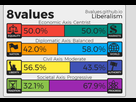
"8Values : Social Liberalism"


![[[sticker:p/1ljr]]](https://image.jeuxvideo.com/stickers/p/st/1ljr)
Une vidéo pour toi 
https://www.youtube.com/watch?v=qsYWQuBxEzM
Le 27 juin 2017 à 14:42:45 Pascal_op44 a écrit :
Une vidéo pour toihttps://www.youtube.com/watch?v=qsYWQuBxEzM
Ayaaa les gaucho en sueur 
Le 27 juin 2017 à 14:42:36 -ChrisProlls- a écrit :
T'as dû te sentir tellement seul en esc 
 Noraj
Noraj
- Religion